
Vlogger Go Viral: Tuber Life
Tapps GamesStrategy
4.5151.80K Reviews
- Version
- 2.43.76
- Installs
- 50.00M
- Age Rating
- Everyone
Screenshots
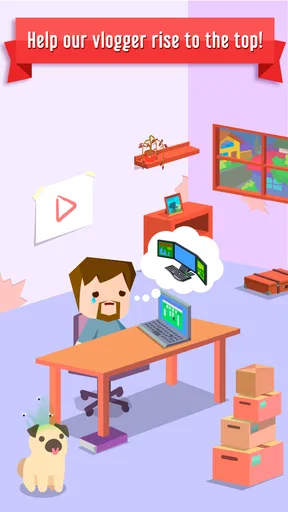

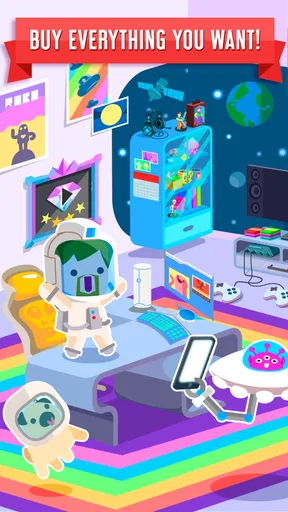
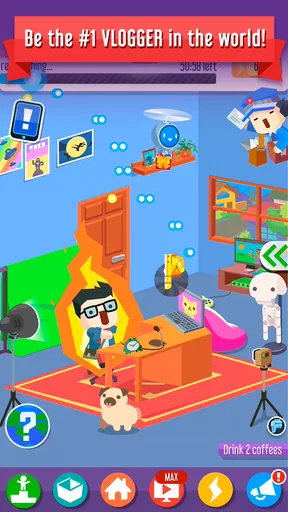
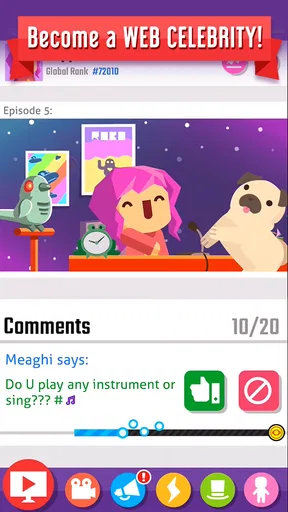


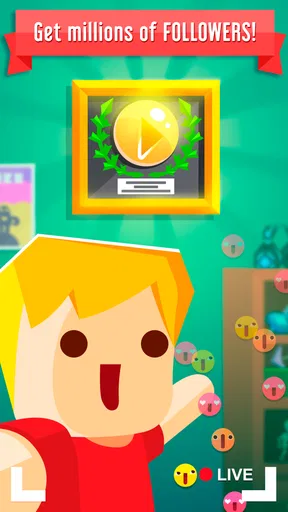
Our Review of Vlogger Go Viral: Tuber Life
 Analysis by Appyee
I went into Vlogger Go Viral: Tuber Life expecting a light strategy game about building an online personality, and that is exactly where it works best. It turns the familiar idea of growing a video channel into an idle management loop: I make choices, improve the channel, collect progress, and return later to keep the climb moving. It is not a serious creator simulator, but it does a good job of making small decisions feel connected to a larger goal.
The game comes from Tapps Games and is free to start. It sits in the strategy category, although its strategy is deliberately casual rather than demanding. The appeal is less about complex planning and more about deciding how to spend attention, upgrades, and waiting time. If you enjoy watching a small project gradually become more successful, the format is easy to understand within a few minutes.
My overall impression is positive, with an important qualification: the idle structure can make progress feel slower when I stop checking in, while optional purchases can become tempting when I want to speed things up. That balance matters more here than the basic controls. The game is accessible to Everyone, and its broad presentation makes it suitable for younger players, but anyone considering it should still understand that free-to-play progression may encourage spending.
What the first sessions feel like
The opening is built around a simple fantasy: start as an unknown creator and work toward a more visible channel. Instead of asking me to produce real videos, the game reduces the creator journey to manageable decisions and repeatable actions. That makes it approachable for people who like tycoon games but do not want a complicated economy to learn.
The strongest part of the early experience is the sense of momentum. A small improvement can make the next return feel worthwhile, and the idle format means I do not have to sit in the game continuously to feel progress. I can play for a short period, leave, and come back when I have time. That fits naturally into a commute, a study break, or a few minutes before bed.
There is also a useful psychological distinction between active and idle play. When I am present, I feel involved in choosing what to improve or collect. When I am away, the game becomes more of a progress tracker. Players who want constant action may find the second mode thin, while players who enjoy gradual development will probably appreciate it.
Where players commonly get stuck
The first place I would expect new players to hesitate is deciding whether to spend resources immediately or wait for a more meaningful improvement. The interface encourages quick taps and short rewards, but not every small gain has the same value. My practical advice is to pause before buying the first available improvement and consider whether it helps the activity you are currently using most often.
Another point of friction is the difference between visible progress and useful progress. A larger number or a new piece of channel development can feel exciting, but an upgrade that improves the part of the loop you repeat most often may be more valuable than one that merely looks impressive. I found that treating each purchase as part of a chain, rather than as an isolated reward, made the game easier to manage.
Idle games can also create confusion when a player expects every return to produce a dramatic jump. That is not how this format usually feels. The game is designed around accumulation, so a quiet session does not necessarily mean something is broken. Before reinstalling or changing settings, I would first check whether the expected progress is simply arriving in smaller steps than anticipated.
Setup checks before blaming the game
The listed minimum operating-system requirement is Android 8.0, so I would begin by checking that the device meets that baseline and has enough free space for a comfortable installation. If the game opens but behaves poorly, closing other demanding apps and restarting the phone are sensible first steps. Those checks sound obvious, but they often separate a game issue from a device that is already struggling.
I would also make sure the installation has completed properly before judging loading behavior. A weak or interrupted connection can leave a player thinking the game itself is failing, especially during the first launch. Trying again on a stable connection, then reopening the app normally, is a safer first response than repeatedly tapping through an unresponsive screen.
Because this is an idle game, keeping the device clock accurate is another practical precaution. I would avoid manually changing the time to force progress. Even when that seems like a shortcut, it can make timers and rewards behave unexpectedly. Using the phone’s normal automatic time setting gives the game a more consistent environment and prevents self-created confusion.
Notifications, background activity, and battery-saving behavior can also affect how an idle game feels, although they are not automatically signs of a defect. If I return after a long break and see less progress than expected, I would compare the result after a normal short session rather than assuming the entire offline loop has failed. Battery optimization can limit background work on some devices, so checking the phone’s own battery settings may be worthwhile.
A steadier workflow for building progress
My preferred routine is to begin each session by collecting what has accumulated, then review the available improvements before spending anything. That order gives me a clearer picture of what I can actually afford and prevents the common mistake of using resources on a minor purchase just because it is immediately visible.
After that, I focus on one improvement path at a time. Switching constantly between unrelated upgrades makes the channel feel busy without necessarily making it stronger. Concentrating on the loop I use most often creates a clearer feedback cycle: I can see what changed, decide whether it helped, and only then move to another area.
A useful habit is to stop playing at a sensible point instead of tapping indefinitely. Once the next meaningful improvement is out of reach, there may be little benefit in forcing another repetitive cycle. I would leave the game and return later, especially if I am playing during a short break. That is where the idle design earns its place: it works better as a low-pressure routine than as a game demanding constant attention.
I also recommend treating optional boosts carefully. A purchase may make the next stage feel smoother, but it can hide whether the underlying progression is enjoyable without spending. Since individual in-app purchases range from $0.99 to $99.99, I would decide on a personal limit before playing rather than making an impulse purchase after a slow session. The free entry point is useful, but the spending range deserves attention.
Recovering when progress feels wrong
If the game appears stuck, I would use a simple recovery sequence. First, I would finish any visible action normally and wait a moment for the result to register. Next, I would close the game through the regular app switcher, reopen it, and check whether the same state remains. A device restart is the next reasonable step if the problem affects more than this one app.
I would avoid clearing app data or uninstalling as an early reaction. In a progression game, those actions can create a much bigger problem if progress is stored locally or if the player has not confirmed how restoration works. A safer approach is to document what happened, note the last visible state, and try the least destructive fixes first.
When a reward seems delayed, I would also check whether the action actually completed rather than assuming the tap was ignored. Idle games often place several small elements close together, and a missed tap can look like a failed calculation. Slowing down for a second and watching the result is surprisingly helpful, particularly on smaller screens.
Another recovery tip is to test the game after a normal session instead of immediately after changing several phone settings. If I alter the clock, battery controls, network, and app permissions all at once, I lose track of what helped. One change at a time produces a much clearer answer and avoids turning a minor annoyance into a long troubleshooting exercise.
When the app is not the real cause
Some frustrations come from expectations rather than malfunction. This is not a full video-production tool, and it does not replace platforms used for recording, editing, publishing, or managing a real audience. Its creator theme is a playful wrapper for strategy and idle progression. Anyone looking for practical advice about becoming a real streamer should choose an educational or production-focused app instead.
Performance complaints may also be related to the phone. If other games are slow, the device is nearly full, or many apps are running at once, this title may simply be showing a broader system problem. I would compare its behavior with another lightweight game before concluding that the installation is uniquely unstable.
Spending frustration is different again. If progress feels deliberately slow after a player has already decided to avoid purchases, that may be a design trade-off rather than a technical issue. The right response is not necessarily to buy something. It may be better to decide whether the free progression remains enjoyable and, if not, move on to a strategy game with a more generous structure.
How it compares with other casual strategy choices
Compared with a traditional strategy game, this one asks for much less planning. There is no need to study a large map, manage several competing factions, or learn a long list of systems before making a useful decision. That simplicity is its advantage for short sessions, but it also means experienced strategy players may find the choices limited.
Compared with a conventional tycoon game, the creator theme gives the progression a recognizable personality. Instead of managing a generic shop or city, I am watching a fictional channel grow. That framing makes the early stages more inviting, especially for players who already understand the appeal of subscribers, uploads, and online visibility. The trade-off is that the game’s interpretation of creator life is abstract rather than realistic.
It also differs from action-heavy games because the main reward comes from planning the next improvement, not from mastering reflexes. If I want a game I can play with sound off and one hand while waiting for an appointment, this is a better fit than a competitive action title. If I want constant novelty, direct control, or meaningful moment-to-moment challenge, another genre will suit me better.
Who will enjoy the loop, and who should skip it
I would recommend it to casual players who like incremental progress, fictional business growth, and short check-in sessions. It is especially approachable for someone who has never played a strategy game and wants a gentle introduction to resource decisions without being overwhelmed by a complicated tutorial.
It can also work for families looking for an accessible game with an Everyone age rating. Still, I would explain the purchase model to younger players and use the device’s normal purchase controls. Free installation does not mean every part of the progression is free of spending prompts, so supervision is sensible even when the content itself is mild.
I would skip it if I dislike idle mechanics, repeated collection, or progress that continues gradually rather than through skillful play. I would also choose something else if my main goal is to create real videos, learn editing, or understand how online channels actually operate. The theme may sound practical, but the experience is entertainment first.
Performance, longevity, and value
The game’s long-term value depends on whether the basic loop remains satisfying after the novelty of becoming a new creator fades. I enjoyed the early sense of building from a small starting point, but the same structure can become routine for players who need frequent mechanical changes. The best way to approach it is as a companion game, not as the only game on a phone.
Its popularity suggests that the concept has connected with a large audience: it has passed 50 million installs, with an average rating of 4.5 from around 2.3 million ratings and about 152 thousand written reviews. Those figures do not guarantee that every player will enjoy the pacing, but they do show that the format has broad reach rather than being an obscure experiment.
The current version is 2.43.76, and the game was released on November 10, 2015. That history makes the title feel established, while also setting a reasonable expectation: I would not approach it expecting the design freshness of a brand-new release. Its appeal is the familiar, polished simplicity of a long-running casual game, not constant reinvention.
For a free game, the entry barrier is low. The real value question is how comfortable I am with waiting and whether I can ignore optional purchases when progress slows. If I can enjoy small gains without treating every delay as a problem, the free version offers a pleasant way to fill short gaps in the day. If I need rapid advancement, the purchase structure may become more noticeable than the strategy.
My practical verdict
I found this to be an easygoing strategy game with a clear identity and a useful pick-up-and-play rhythm. Its strongest feature is not realism; it is the way the creator theme gives ordinary idle progression a more personal direction. I can understand what I am building toward, and I do not need a long uninterrupted session to feel involved.
The main limitations are equally clear. The decisions are lighter than those in deeper strategy games, repeated actions can become predictable, and optional purchases may appeal most when the natural pace feels slow. Setup problems are often worth checking at the phone, connection, clock, or battery-settings level before blaming the game, while progress complaints may simply reflect the intended idle design.
Tapps Games has made something best suited to relaxed players who want a fictional channel-management fantasy rather than a serious lesson in content creation. I would install it for short daily sessions, keep spending firmly under control, and focus on meaningful upgrade choices instead of tapping through every available action. If you enjoy gradual growth more than constant action, this is a friendly and accessible choice; if you want deep strategy or real creator tools, look elsewhere.
Verdict
Strengths of Vlogger Go Viral: Tuber Life
- Simple tap-based gameplay is easy to learn and play casually.
- Frequent unlocks make early progress feel rewarding.
- Video themes add variety to the channel-building experience.
- Offline play is useful when you do not have an internet connection.
- Bright cartoon visuals are appealing to younger players.
Limitations of Vlogger Go Viral: Tuber Life
- Progress can become repetitive after the initial upgrades are unlocked.
- Some upgrades and rewards may encourage frequent ad viewing.
- Energy or timed systems can slow progress between play sessions.
- The game has limited depth for players seeking advanced simulation.
- In-app purchases may make faster progression more tempting.
Other Releases by Tapps Games
View All
Do Not Disturb Funny Prankster
Educational4.6

My Monster Album - Collect & T
Educational4.4
Similar Picks in This Category
View All
Clash of Clans
Supercell4.5

Plants vs. Zombies™
ELECTRONIC ARTS3.7

Lords Mobile: Kingdom Wars
IGG.COM4.5

Clash Royale
Supercell4.4

State.io — Conquer the World
CASUAL AZUR GAMES4.1

Car Driving School : Car Games
Spark Game Studios3.9
Frequently Asked Questions
What is Vlogger Go Viral: Tuber Life about?
Vlogger Go Viral: Tuber Life is a casual simulation game in which you build and manage your own video channel. You choose content ideas, record videos, improve your equipment, respond to trends, and work toward becoming a famous online creator. The game combines tapping, upgrades, resource management, and light story elements, making it easy to play in short sessions while still offering plenty of progression goals.
Is Vlogger Go Viral: Tuber Life free to download and play?
The game is generally free to download, but it may include optional in-app purchases and advertising. These purchases can provide extra currency, speed up certain upgrades, or unlock convenience features, although they are not necessarily required to progress. Players should also check the store listing for the current pricing, supported devices, and any regional differences before installing the game.
Does the game require an internet connection?
Some parts of Vlogger Go Viral: Tuber Life may work without a constant internet connection, especially basic gameplay and progression that are stored locally on the device. However, an internet connection can be necessary for advertisements, special events, cloud-related features, updates, or in-app purchase verification. Availability may vary by version, so offline functionality should not be assumed for every feature.
Is Vlogger Go Viral: Tuber Life suitable for children?
Vlogger Go Viral: Tuber Life uses colorful graphics, simple controls, and an approachable theme that can appeal to younger players. Nevertheless, parents should review the game’s age rating and privacy information because it may contain advertisements, optional purchases, and references to online creator culture. If children are playing, parental controls are recommended to prevent accidental spending or access to unsuitable advertising content.
What devices are compatible with Vlogger Go Viral: Tuber Life?
Compatibility depends on the operating system version, available storage, and the specific Android or iOS device. The game is designed for mobile devices and generally runs best on relatively modern phones and tablets with updated software. Before downloading, check the official Google Play or App Store page for the latest requirements, because support, file size, and performance expectations can change after updates.
Play our best games!


